HISTORICAL COLLABORATION
MONOPOLY GO Harry Potter collaboration archive: album, events and rewards
A sourced archive of Harry Potter GO, including its Dec 2025–Feb 2026 dates, 23-set Sticker Album, Chocolate Frogs, House collectibles, themed minigames and return-status check.
Ended · Dec 10, 2025–Feb 4, 2026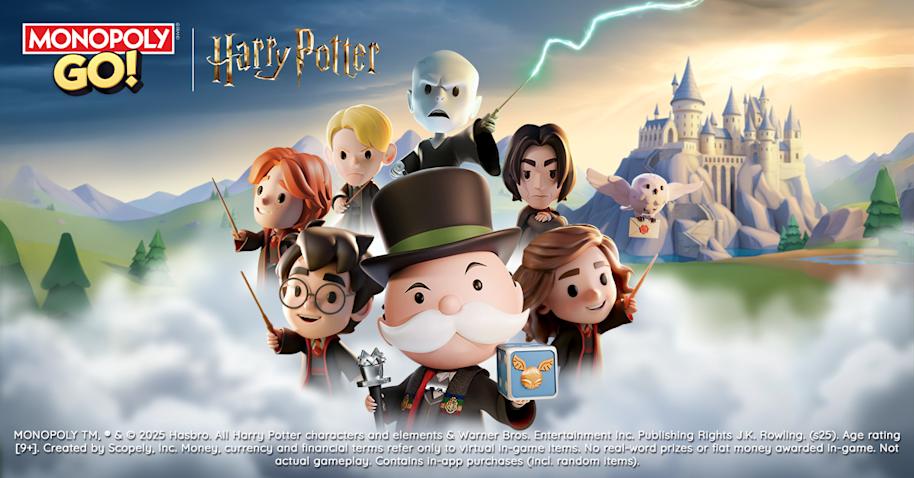
Harry Potter GO ran from Dec 10, 2025 to Feb 4, 2026
Scopely announced the MONOPOLY GO and Harry Potter collaboration on Dec 2, 2025, with the playable season beginning Dec 10. The official Wizarding World article states that the limited-time campaign remained available through Feb 4, 2026. It transformed the game around locations, characters, objects and film moments from the wizarding world. The dates place Harry Potter GO firmly in the archive today: the Album, its sticker packs and its event currency are no longer the active collection.
The campaign was licensed by Warner Bros. Interactive Entertainment and promoted through MONOPOLY GO, Scopely and the official Harry Potter site. That source chain is stronger than an isolated screenshot because it establishes both the partnership and its limited window. This archive uses those official pages for the collaboration scope and a dated album reference for detailed counts. When a historical guide and the live game disagree, the present game client must be used for current play.
The 23-set Album covered 207 stickers and a full story journey
Harry Potter GO used 23 sets with nine stickers per set, creating a 207-sticker main collection. The sets moved through filming locations, school supplies, spells, Hogwarts Houses, Quidditch, transportation, wands, characters, magical objects, Diagon Alley, Hogsmeade, the Yule Ball and other recognizable themes. Scopely's later behind-the-scenes article explained that the Album was designed as a journey across the wizarding world rather than a disconnected stack of character portraits.
The public reward guide lists 33 Gold Stickers, with the final Famous Witches & Wizards set built entirely around high-rarity Gold cards. Completing the standard Album awarded 15,000 Rolls, a Harry Potter board token and Cash; the Prestige completion offered another 15,000 Rolls, a themed dice skin and Cash. These figures are archived season rewards, not a standing offer. No player can begin the old Album now and earn them from current packs.
Set completion and Album completion were separate checkpoints. A player could earn the Rolls or cosmetic attached to one finished set while still missing cards elsewhere, but the Harry Potter token required the complete standard Album. Prestige then reset the collection and added its own challenge rather than letting the first completed book remain filled. That reset explains why two players could show different totals during the same season: one might still be finishing the standard 207, while another had already moved into Prestige and was rebuilding the collection for the additional reward.
Hogwarts, Diagon Alley and Hogsmeade became seasonal Boards
The collaboration did more than place a logo over the standard Board. Seasonal maps reimagined Hogwarts Castle, Diagon Alley and a holiday Hogsmeade Village in the bright MONOPOLY GO style. Mr. M's story began around Platform Nine and Three-Quarters at King's Cross before moving into the wizarding world. Characters including Harry, Ron, Hermione, Hagrid and Dumbledore appeared alongside the game's own cast, giving the season a clear narrative route from one Board to another.
Completing the first Seasonal Map introduced a House choice and a matching House Crest Shield, allowing players to identify with Gryffindor, Hufflepuff, Ravenclaw or Slytherin. A separate Dec 17 login promotion awarded a Dobby Shield. These were different collectibles with different unlock conditions: one was tied to Seasonal Map progress and one to a dated gift. Archive pages must keep those paths separate so a saved image of the Dobby reward is not misreported as the prize for choosing a House.
Chocolate Frogs created a season-unique Sticker path
Chocolate Frogs were the collaboration's most distinctive Album mechanic. Eligible sticker packs could include a Chocolate Frog Box, which fed the Famous Witches & Wizards collection. The official announcement presented this as a season-unique set, while the later design article described it as a meeting point between surprise, animation and pack opening. The frog could appear against the phone screen before slipping away, turning an established collection action into a recognizable Harry Potter moment.
The art team also used animated stickers for the feature and included subtle character behavior, such as Dumbledore occasionally waking to acknowledge the player. That detail explains why an archived video may look different from a static card list. It does not mean every pack guaranteed a Chocolate Frog or that the special set could be completed through ordinary trades at any time. Its availability belonged to the Harry Potter season and the rules shown in the live client.
Racers, Partners, Treasures and Boutique carried the theme
Themed minigames connected familiar MONOPOLY GO systems to recognizable wizarding activities. Quidditch, Hogwarts and Gringotts Racers turned team races into broom- and location-inspired competitions. Wizarding World Partners asked friends to collaborate on character builds, while Hogwarts Treasures sent players after artifacts including the Philosopher's Stone. Blocks Boutique used a shop puzzle format to stock shelves with wizarding sweets. The names changed the presentation, but each event still had its own dated currency, milestones and reward track.
The season also used Golden Snitches, themed Chance Cards, House Shields and a Hogwarts Express makeover for Tycoon Express. These details made the collaboration feel broader than the Album without increasing the 23-set count. When cataloguing screenshots, identify whether an item came from the main Album, a set reward, a login gift, an individual minigame or a transport feature. Combining every collectible into one reward list makes the archive inaccurate and creates false expectations about how an item was earned.
How Scopely balanced Harry Potter identity with MONOPOLY GO
Scopely's Jan 29 behind-the-scenes feature adds context that a reward table cannot provide. The team drew from the film version of the wizarding world, selecting recognizable locations, objects and character moments while simplifying them into the game's approachable visual language. Repeating checkerboard patterns linked wizard's chess, stone floors and banners across different features. The goal was not to import every piece of Harry Potter lore, but to choose elements that remained readable on a small mobile Board.
Character design required another balance: the artists needed recognizable film likenesses without abandoning MONOPOLY GO's rounded, humorous style. The team created age variations for central characters, changing height, hair and costumes as the Album moved through the story. Designers also discarded ideas that did not work smoothly, including an early magical-beasts Partners concept. Recording those decisions makes the archive useful as collaboration history, not just a list of expired prizes.
What collectors can still learn from the ended Album
The 207-sticker structure rewarded early organization. Low-rarity sets could be finished through regular packs, while later sets concentrated high-star and Gold requirements. A collector needed to track duplicates, reserve safe trades for meaningful gaps and avoid assuming every Gold would become available in Golden Blitz. The Famous Witches & Wizards end set made special-pack opportunities particularly important. Those principles still help with current albums, but the Harry Potter card names and old Blitz windows do not.
A historical trade post should be treated as closed even if its author never deleted it. Harry Potter stickers cannot complete Happy Harvest sets, and entering credentials into a site promising archived cards creates unnecessary account risk. Use the active Sticker directory for inventory, verify the live album name before arranging a swap, and use the game's safe exchange flow for current tradable cards. An archive helps identify old material precisely so it is not mistaken for a present offer.
No new Harry Potter return is confirmed
As of Aug 10, 2026, the cited official pages document the ended Dec 2025–Feb 2026 campaign; they do not announce a second playable season. Anniversary marketing, saved app-store artwork, an old Board screenshot or a creator revisiting the Album cannot establish a return. A valid return report needs a newly dated MONOPOLY GO, Scopely or licensed Harry Potter announcement with a future game window.
Any future notice must also be read for scope. A returning token, themed sale, sweepstakes or one minigame is not automatically a revived 23-set Album. Until a source identifies the format, dates and availability, this URL remains a historical collaboration archive. New facts can be added with a fresh verification date while the original season timeline, sources and ended status remain visible for players arriving from older searches.
Return rumors should also be checked against licensing language. The 2025 campaign was an authorized collaboration with a defined end date, so old legal text can remain attached to archived pages long after play ends. That text proves the earlier partnership, not a new agreement or schedule. The safest update sequence is a newly dated announcement, a matching in-game countdown and current support information. Without all three, report only what the source actually shows and keep the Album status historical.